Here is the general disclaimer, information, what-have-you preceding all my lists. It is abundantly clear that I am a list fiend-- the sheer concept of making a list of my all-time, top one hundred anything excites me beyond belief. Spending hours debating the minutiae qualifying one piece of art above another is kind of what academia and the voices in my head demand of me; however, I find that each end of year, somehow, critics have found dozens, even hundreds of pieces to evaluate and rank due to the flooding of the proverbial airwaves with content. It becomes somewhat of a wasteland to navigate, and to extend the metaphor, most of it is really garbage. In two hundred years, nevertheless five, we won't remark how 2018 was the year of the 27 musical masterpieces or the 14 best films ever made. It just won't happen. So I am going to parse down my lists to five, that's right, a mere five pieces in each category with a brief review. Of course, may posterity and your own (however misinformed) subjective opinion be your guide.
Following is my list of the five best new albums released in 2018:
5. Gulfer Dog Bless Listen on Spotify
Overall Grade: 88/100
Must Listen Tracks: "Baseball" and "Doglife"
Review: Dog Bless by Gulfer is certainly the most obscure album on this year's list. Fifteen years ago, these guys would have had a bigger label and dozens more bands to tour with, but the current music industry being what it is, I am just grateful they are making music, and I get to hear it. It is math rock/post-punk as it should sound. There is a rawness to the sound that isn't produced out of the record, as seems the temptation in the digitally-produced industry. I am often bitter at the internet and the over-saturation of music as it certainly allows for so many sub-standard songs and musicians to be released, but were it not for Spotify, I wouldn't have found Gulfer on my Release Radar this year. After hearing "Baseball," I decided to give the whole record a go. My initial reaction to the opener, "Secret Stuff," was "Wow! This guy can't sing. I love this." The intentional "ugliness" of the opening sets up the disillusionment of the record's lyrical and musical content. A theme of lost innocence and jadedness stemming from youth. The songs make great use of dynamics; the builds and breakdowns line up well with the syncopations, and I find myself lurching back and forth in my seat in the way that only a good math rock record can make me almost seize-dance. A great album for fans of the genre in the late-90s/early 2000s.
4. Cursive Vitriola Listen on Spotify
Overall Grade: 89/100
Must Listen Tracks: "It's Gonna Hurt" and "Ouroboros"
Review: The new Cursive was advertised as, well, the old Cursive. It was, by far, my most-anticipated record of the year. All the early reviews seemed to draw comparisons to The Ugly Organ and even Domestica, and the similarities are certainly there; however, Vitriola is its own beast, as the cover itself kind of implies. Cursive has a penchant for the dark and Kasher doesn't let down this time. The cleverness and playfulness of his solo work have been removed and darkness remains, but some of the delivery of the lyrics (as was pointed out to me by a fellow Kasher fan) is markedly un-Cursive-like. The album's message also seems oddly too general, from a writer who is a master at creating themes and even concept album a la Organ and Game of Monogamy. All being said, the album's depressive abyss fits the message present times Kasher seems to be reflecting upon: a dark time to live in America and a dark time to be an artist. Don't get me wrong, it is still a great record, I just had unrealistic expectations. Kasher is one of the greatest artists of the time and the albums dense lyrics are carefully crafted and invite the listener into the abyss.
3. Stephen Malkmus and the Jicks Sparkle Hard Listen on Spotify
Overall Grade: 93/100
Must Listen Tracks: "Middle America" and "Solid Silk"
Review: Stephen Malkmus has been hit-and-miss since going solo, so I didn't know what to expect in this year's Sparkle Hard. When the band released the first single, "Shiggy," I was hopeful but held my skeptically bated breath. When I listen to Malkmus, I need parts where I can sing along which is why my favorite Pavement albums are Brighten the Corners, Terror Twilight, and Crooked Rain. Malkmus can tend to go totally jam band with endless postmodern bluesy guitar solos, but that's not the point of Malkmus. I need the seemingly nonsensical lyrics that I can sing along to from Pavement's "There's no coast of Nebraska" to the new album's "Pile into Jackie, he's up for it, he'll never see the butter-side of his daily bread." In fact, lyrically Malkmus has taken a huge leap forward. So many records this year attempted to reflect the disillusionment of America, but fall short and come off trite. Leave it to 52-year-old (yeah, I know) Malkmus to get it right. The album marries the jam band and the sing-along, the ridiculous and the earnest.
2. Soccer Mommy Clean Listen on Spotify
Overall Grade: 95/100
Must Listen Tracks: "Skin" and "Last Girl"
Review: Welcome to the year of female-fronted indie rock. In the late 90s and early 00s it was rare to see even a girl in a band, save for one fronted, lead, and completely envisioned by a female artist. There were, of course, a few exceptions amongst the Riot Grrl scene and the few that survived the aftermath, such as Sleater Kinney and Rainer Maria. It makes me remorse for what might have been missed through all of that masculine oppression. Getting to the record itself, Sophie Allison, better known as Soccer Mommy, put out what would have been in almost any other year the best indie record. The record's naked and stripped down recording, often just Allison and her chiming, undistorted electric guitar serves as a fitting canvas for the poetry splayed atop it. The message is unapologetically feminist, certainly inspired by the aforementioned Riot Grrl movement, but the delivery is so much more palatable, despite the persistence of lyrics saturated with irony. Allison writes catchy hooks but maintains indie sensibilities and artistic credibility. The album is skillful, poignant, and intensely relistenable (okay, now I'm just making up words).
1. Snail Mail Lush Listen on Spotify
Overall Grade: 98/100
Must Listen Tracks: "Heat Wave" and "Full Control"
Review: What did you do after graduating high school? Did you head out on a tour with your band circling the U.S., traversing Europe, hitting all the hot spots in Asia? Release an album to critical acclaim? That's what Lindsey Jordan, who plays under the moniker Snail Mail, did. She's still going strong and still on the road. At just 18 years old (now 19), she masterfully crafted the best indie album since Sleater Kinney's 2015 release No Cities to Love. The whole record works as a single piece of art, bookended with "Intro," a prelude to the ender, "Anytime." I first caught the buzz of Snail Mail through Matador's social media. I heard the song "Pristine," one of the album's many standouts prior to the release of the LP, and I wanted, no needed, to hear the rest of the record. The chimy guitars and unapologetic homage to traditional indie takes nothing away from the edge of the lyrics and sound. The songs are easy to sing to, and the songs are sequenced dynamically, transitioning from low to high, fast to slow, and then back again. The only real flaw I find in the freshman release is that there are only ten tracks. I just want more. To answer the question posited in "Pristine," "Don't you like me for me?" Yes, yes I do, Lindsey Jordan. And I, for one, bow to our new female indie-rock overlords.
Saturday, January 5, 2019
Listmania 2018: Books
Here is the general disclaimer, information, what-have-you preceding all my lists. It is abundantly clear that I am a list fiend-- the sheer concept of making a list of my all-time, top one hundred anything excites me beyond belief. Spending hours debating the minutiae qualifying one piece of art above another is kind of what academia and the voices in my head demand of me; however, I find that each end of year, somehow, critics have found dozens, even hundreds of pieces to evaluate and rank due to the flooding of the proverbial airwaves with content. It becomes somewhat of a wasteland to navigate, and to extend the metaphor, most of it is really garbage. In two hundred years, nevertheless five, we won't remark how 2018 was the year of the 27 musical masterpieces or the 14 best films ever made. It just won't happen. So I am going to parse down my lists to five, that's right, a mere five pieces in each category with a brief review. Of course, may posterity and your own (however misinformed) subjective opinion be your guide.
Following is my list of the five best new books I read in 2018. Unlike other lists, it is not necessary that these be new books, just that it be the first time I have read the books.
5. Petty: The Biography by Warren Zanes
As most who know me, I love reading biography and memoir about music and musicians. I feared that I already knew too much about Petty from the fantastic Runnin' Down a Dream documentary and thought the book might just be a rehash. While certainly, much of the basis of that story was there, the book supplements the rock doc nicely. I particularly enjoyed reading about the early days of touring, Tom's friendship with Stevie Nicks, how touring with Bob Dylan as his backing band made Tom and the Heartbreakers a better-performing band years into their fame, and yet another recounting of the formation of the Travelling Wilburys. Petty's humble beginnings and utter failings at school made him destined for one of two things: a life of nameless sub-mediocrity or rock and roll fame. There was to be no middle ground. It is impossible not to like someone who battled the oppressive record industry for the rights to his art at a time when record executives were king. As Petty discovered about taking control of his destiny in his artistic and personal life, "It's Good to Be King."
4. The Heart is a Lonely Hunter by Carson McCullers
To Kill a Mockingbird might never have been written were it not for this book. McCullers captures the south in the mid-20th century in a way I had only experienced in Harper Lee's classic previously. The book is masterfully crafted, weaving in and out of the lives of Singer, a deaf-mute; Biff Brannon, the owner of a local restaurant; Dr. Copeland, an African American doctor, Mick Kelly, a bright teenage girl; and Jake Blount, the town drunk. I particularly found the lives of Mick Kelly and Singer fascinating. Mick reminded me much of Scout Finch, though her bildungsroman moment occurs a little later in her teenage years and her revelation seems much less inspirational and more in-line with the ideals of practicality and realism. Singer becomes the character on which the whole novel hinges, as other characters unexpectedly find solace in the company of the man who can't speak back nor fully understand what it is they are trying to communicate. The novel is rich in themes relating to misunderstanding and psychological isolation. Certainly, the novel stands as a classic of the 20th century.
3. Madaddam Trilogy (Oryx and Crake, The Year of the Flood, MadAddam) by Margaret Atwood
A significant portion of my summer was spent wending my way through Margaret Atwood's Madaddam Trilogy. As with all tales in which some of the characters are left out in the dark for significant amounts of time, I grew impatient with some of the plot lines but became invested enough with the rest of the characters to continue reading in order to discover what became of the characters about which I was left in suspense. The setting is yet another dystopian world in which a pandemic has wiped out the majority of the population and destroyed the technological advances of mankind in the process. My favorite book in the series is the first, in which the protagonist, called Snowman, recounts the story of how he meets Oryx and Crake and how this apocalyptic wasteland has come to be. The second book concerns itself with Toby and Ren, who tell their stories through alternating and intersecting perspectives. They tell of their lives before the "end of the world" and after the events at the end of Oryx and Crake have taken place. The characters from the first book "drop in" for continuity and to set up the third book in which the tale of all of the principles draws to a close. Atwood masterfully creates an entirely different dystopia than in Handmaid's and constructs differing messages. One of my few quips was some of the technology in book one seemed to really be outmoded or on its way out even while Atwood was writing it. It may have been a slight oversight in her research or just a mere blip caused by the quick-changing technologies of the 1990s when she was writing. The author is primarily concerned with environmental responsibility as well as introducing many questions about issues that arise from problems of overpopulation. I spent a few months immersed in this dystopian desert.
2. Y: The Last Man (Series) by Brian K. Vaughan and Pia Guerra
As of a few years ago, I had dabbled in comics, having always been a fan of the Marvel and DC animated, then live action films and series as I grew up, from watching the old-school 1950s and 60s animated Superman on VHS to waking up early on Saturday mornings to watch Spiderman and X-Men, then finally to the explosion of Marvel in theatres and The Walking Dead universe on AMC. I made the decision to delve into The Walking Dead graphic novels (still slowly making my way), but it wasn't until I read the Scott Pilgrim series that I gave the genre any serious consideration, as the series showed me how the medium could communicate the story and message in an entirely unique way. O'Malley's masterpiece invited me to explore more, so in recent years, I have dove in. Fast-forward to a comic shop in Santa Fe. Liz picks up Y:The Last Man because of the blurb on the cover: "The best graphic novel I've ever read." by Stephen King. She buys it, and it sits for a few months before I pick it up and read it. Halfway through, I am sold and order the next one on Amazon. The story begins when every male (of every species) on the planet dies, just drops dead, except for a man named Yorick and the capuchin he is training. This story is the best dystopian fiction I have read since the first time I read The Handmaid's Tale. It may, dare I say it, be better. The story is packed with pop culture and literary allusions, including the Shakespearean names of the protagonist and his sister, Hero. The twists and turns, and cliffhangers sometimes required that I close the book and savor the suspense that I know I would have had to suffer were I a reader waiting for the next issue to come out. Vaughan explores what a world without men and traditional masculinity might look like. What is human nature? What is man nature? As well as a questioning of what is too far when it comes to science? The storytelling is so cinematic that a graphic novel was the only choice for telling the story, so cinematic, that I couldn't believe that someone hadn't nabbed up the movie or television rights to this amazing story. Last week, I googled the series and lo and behold, FX is in pre-production on a series. I am cautiously optimistic. I wish one of the streaming services had done it instead, as the binge-worthiness is certainly there, but I will hold my breath and hope for the best. The graphic novel is leaps and bounds better than The Walking Dead series. If that is some kind of Church of the Holy Comics sacrilege, feel free to excommunicate me. I will gladly leave the congregation if I can take my collection of Y: The Last Man with me.
1. The Color Purple by Alice Walker
A masterpiece. There is no other word to describe the craftmanship Walker imposes on the reader through the voices of her characters in The Color Purple. I was already familiar with the story, not through the film, as might be expected, but through the Broadway musical, which I saw several years ago in New York, so I knew the story would pack a punch. Walker's choice to narrate the story through a series of letters written by a barely literate and often ignorant narrator yet still manage to clearly communicate plot and theme to the reader demonstrates such adept writing that it baffles my mind as to how she accomplishes the task. So much of the story seems to be mirrors of other parts, for example, Celie and Mr. _____'s relationship and Harpo and Sofia's relationship (complete with Shug Avery and Squeak subplots). These stories are the same but opposite in many ways. For example, Mr. is obviously overbearing and dominant over Celie, whereas Shug Avery has absolute control over her relationship with Mr.; whereas Sofia exudes none of Celie's subordinance, which causes Harpo to seek out Sofia's foil, Squeak. This book is one of those that contains absolutely no superfluities. Every word, moment, symbol, and device is purposefully and poignantly crafted. The book is already calling my name for a reread. It is the kind that invites me back in to find new and illuminating truths-- a lifetime mentor text-- a workshop in writing fiction.
Listmania 2018: Movies and TV
Here is the general disclaimer, information, what-have-you preceding all my lists. It is abundantly clear that I am a list fiend-- the sheer concept of making a list of my all-time, top one hundred anything excites me beyond belief. Spending hours debating the minutiae qualifying one piece of art above another is kind of what academia and the voices in my head demand of me; however, I find that each end of year, somehow, critics have found dozens, even hundreds of pieces to evaluate and rank due to the flooding of the proverbial airwaves with content. It becomes somewhat of a wasteland to navigate, and to extend the metaphor, most of it is really garbage. In two hundred years, nevertheless five, we won't remark how 2018 was the year of the 27 musical masterpieces or the 14 best films ever made. It just won't happen. So I am going to parse down my lists to five, that's right, a mere five pieces in each category with a brief review. Of course, may posterity and your own (however misinformed) subjective opinion be your guide.
This category is actually much too large, so I felt it necessary to do a few honorable mentions.
Movies: Black Panther, Avengers: Infinity War, First Man, A Quiet Place, Crazy Rich Asians, RBG; I, Tonya; Searching, Three Identical Strangers, Into the Spider-verse
TV: Glow Season 2, Great British Baking Show Collection 6, The Rain Season 1, Making A Murderer Season 2, Superstore Season 4, Fear the Walking Dead Season 4, Orange is the New Black Season 6, The Good Place Season 3, The Sinner Season 2
Following is my list of the five best new movies and series I watched.
5. Bohemian Rhapsody
Some critics and rock biography purists have panned Bohemian Rhapsody, which I am not sure I understand, and I am coming at this film as someone who spends hours upon hours reading music criticism, memoir, and biography. When I read non-fiction, I am looking for the facts, accuracy, as well as entertainment, but when I am watching a biographical movie, I am looking if the story is based in fact, which this one most certainly seems to be. Additionally, I am looking for plot structure, script writing, verisimilitude, and performance. This film delivers on all of those levels. Rami Malek's Freddie Mercury captivated me. Though sometimes factually out of order, based on conjecture, or simply adapted to drive plot to the next major event, the film captures a version of Mercury that is captivating, emotional, and in a spirit meant to both pay tribute and display the man as he really was. It is, by far, the best performance I have seen thus far in the crop of 2019 Oscar-eligible performances.
4. Won't You Be My Neighbor?
I grew up with Mr. Rogers. It's what everyone twenty years older and ten years younger than me says. I say no different. The documentary about the genuine kindness of a regular man who was able to see and embrace others for their differences despite his own convictions and religious beliefs all while championing public television and education for children brought me to literal tears, which is not a common occurrence. Seriously, I cry maybe twice a year. The documentary follows Fred Rogers from his humble beginnings on public access in Pittsburg through his advocation for funding for PBS and children's programming to his honest programs relating to death, race, equality, divorce, and many other topics that other adults so often avoid with children. Most real-life heroes let you down. Mr. Rogers never did.
3. The Marvelous Mrs. Maisel Season 2
Amy Sherman Palladino finally has a platform where her characters can curse. Thank God. I watched both seasons shortly after their release and moved through them at breakneck speed which often can lead to problems in me remembering what happened in the previous season, but Maisel is so memorable that despite more than a year in between viewings, I felt like the characters never left me. I was right back with Midge, Joel, Susie, and the rest of the gang. The lightspeed banter, obscure references, and charming oddness of Palladino are all here, including Alex Borstein's character toting around a plunger she develops an emotional attachment to for several episodes. The hilarity of Mrs. Maisel's continually improving standup routine remains in staunch opposition to her messed up life. I do feel like there were some things that Palladino was just hellbent on doing, such as sending the story to Paris and Catskills, which wasn't necessary and does perhaps distract somewhat and slow Midge's plotline, but some of the most hilarious scenes do occur because of these locations. It also seems that the writers are vying for even more awards in the form of more statues for Tony Shalhoub, and rightfully so. He is incredible in the second season. I cannot wait for season 3, which has gratefully already been announced.
2. Call Me By Your Name
And the winner of the Academy Award for Best Picture of 2018 goes to . . . What? Seriously? Are you kidding me? Did we do the envelope mix up thing again? Gone are the days of Oscars being awarded on merit. Last year's ceremonies were a blatant display of awards handed out to people who had "paid dues" in the vast majority of categories, or so it seemed to me. There was, however, no category more glaringly misawarded than best picture. Call Me By Your Name was a masterfully crafted story with breathtaking performances by the ensemble and namely Timothee Chamolet and Armie Hammer. The writers trust the audience to come on the journey, instead of the heavy-handed, paint-by-number adventure that most movies seem to be any more. The trust it also must have taken in the actors to show their characters' emotions instead of ever heavily implying through dialogue and outright statement was bold but led to an incredible performance-driven story. After watching the film, it stuck with me for weeks. I would think of the moments from the film: the moment when Elio plays piano in the different styles, the moment when the two lovers finally give in to the unspoken, and especially the moment between Elio and his father, when his father gives open acceptance and love to his son. The story is exquisite and gorgeous.
1. The Handmaid's Tale Season 2
I was leery of season two of The Handmaid's Tale. I mean, they were out of source material. I worried that the spirit of the story's message would become convoluted, yet somehow, they found a way to continue to strengthen the themes that were already in the novel and the first season. After all, we don't really know what becomes of Offred between the end of the story proper and the epilogue (and even most of those details remain sketchy). They have continued to tell a very plausible tale of what might have happened next to Offred (aka June). Just when I think I am beginning to like a villain, the rug is always yanked from beneath me, and just when I think a character is irredeemable, she gains traction to redemption. The cliffhanger(s) left claw marks in my couch. In fact, I am still dug in. The messages behind the oppression of women and an authoritarian government ring frighteningly true these days. Never has a story been more apropos for the times. The performances, writing, and production value of this show alone were so stellar that I was convinced that the line between a feature film and a series has all but disappeared due to multi-platform media. This show is as good as if not better than anything the film industry is trying to crank out in order to compete. It basically inspired me to do one list of things I watched instead of separating movies and TV (whatever that means these days). Also, props to the show for continuing to employ Margaret Atwood as a Consulting Producer. Her input is obviously invaluable.
Sunday, August 23, 2015
Review of The Bonesetter's Daughter by Amy Tan
The Bonesetter's Daughter by Amy TanMy rating: 5 of 5 stars
After a summer of highly disappointing new books, I felt that I should read something that I knew would be well-written. The Bonesetter's Daughter certainly didn't disappoint. I have long been a fan of Amy Tan's short stories, but have somehow never found the time to read any of her novels. (I know, I should read The Joy Luck Club).
The characters were very real and relatable. Tan is a master dialoguestician (it's a word now, deal with it). I found the depiction of Ruth, the primary narrator, very true to life-- a woman with a complicated relationship with her mother, LuLing, who immigrated from China. Growing up, Ruth has constantly been under her mom's overbearing thumb. In most of Ruth's early depiction of her mother, I felt, as a reader, no sympathy or positive emotions toward LuLing, though the narrator does keep going back to and helping her mother.
However, after LuLing narrates (through memoir) the middle of the book, the reader can see why LuLing is hardened and strict with her daughter growing up because of the hardships that have befallen her. What I found so fantastic is the two diverse voices in the narration between LuLing (who has been translated) and Ruth. The skill it takes to write in two such different voices is a skill I would love to add to my writing palette.
The prose in this book is beautiful and thought-provoking, but sometimes that is the easy part. The book is chocked full of complex thematic elements. One element I gravitated to is the complex relationship between memory and the past, and how they aren't analogous. LuLing is amidst the beginning stages of Alzheimer's, it is discovered, and she begins to reveal much about her past which Ruth has never heard or has heard alternate versions of, and Ruth begins to attribute these "misrememberings" as further evidence of her mother's lapsing memory. Ruth discovers writings her mother has scratched down, and has them translated by someone who reads Mandarin better than Ruth, who has neglected her mother-given duty to learn the characters of the language. What comes back from the translator affirms many of the memories referred to by LuLing. The irony of a woman with memory loss who is now speaking in more truths than she had before is a revealing commentary about memories and the past not being at all synonymous. As a matter of fact, the past and memory almost become opposites.
One other element I found intriguing was the topic of voicelessness. As the novel begins, Ruth talks much of the past: of a period of time each year when she loses the ability to speak, as well as a traumatic event in her childhood that causes her to go mute for a time, though part of this is put on because LuLing begins treating Ruth in a much kinder way. It is during this time that Ruth begins to channel the spirit of LuLing's deceased nursemaid (view spoiler)[(who it is later revealed is LuLing's mother and Ruth's grandmother) (hide spoiler)], who LuLing refers to as Precious Auntie. In fact, Precious Auntie is the eponymous bonesetter's daughter. I did find it a nice touch that this "channeling" in a way, also made Ruth a bonesetter's daughter. Precious Auntie loses her own voice after a series of truly tragic events. The voicelessness gives a desperation to the story telling. The lack of voice reveals itself as the novel unfolds and this story, Precious Auntie's and LuLing's stories, struggle to find their way from the past into Ruth's present. Voicelessness reflects our emotional inabilities for honesty and speaks to the complexity of our own mind's repression and reluctance for giving us the truth (the truth itself being as complicated and clouded as much as memory).
I consider the novel a superbly-conceived and remarkably-written modern classic and look forward to my next Amy Tan novel. ["br"]>["br"]>["br"]>["br"]>["br"]>["br"]>["br"]>["br"]>["br"]>["br"]>
View all my reviews
Sunday, August 9, 2015
Review of Armada by Ernest Cline
Armada by Ernest ClineMy rating: 3 of 5 stars
Of course when I found out that Ernest Cline was writing another book, I had to read it. Ready Player One was one of my most favorite reads in the past few years. I certainly hate to compare one book with another, but I can't completely separate the two book, partially because the author refers to let me, and that isn't a good thing.
The book is missing some crucial components to make it great. The first is voice. This book seemed very lacking when it came to well-composed sentences and characters with unique voices. The narrator, Zack Lightman, didn't really have a unique or believable voice to me, which hindered my caring about what happened to him as a character. The story was still entertaining enough to push through, but in this genre, I feel like the reading should be effortless, and it wasn't. It wasn't due to intentional syntactical difficulties (or any syntactical difficulties for that matter), vocabulary, or complex themes, which I feel like are valid reasons for readers to slow down in their reading. It just simply was due to an indifference on my own part.
Also, given the open-ended nature of the book, it seems as if a sequel could be in the works, which might quell some (but not all) of the complaints I am about to mention. My second real complaint is that there was way too much superfluous information in the book. The extra stuff served no purpose to me: it didn't make the work more real; it didn't add to my understanding of the characters in any real way; and it wasn't addressed later in the book (though it could be in a sequel). I also found that the relationship between Zack and Lex. It was completely unnecessary unless there are sequels. It just seems like he wanted an ill-conceived and not well-developed, forced love story in the book. There could have been much more actually story instead of the pages wasted on Lex.
I was much more intrigued by (view spoiler)[ the relationship between Zack and his father whom he has assumed dead for the past 17 years. I am placing a spoiler tag here, but it wasn't all that much of a surprise, and I am not sure it was really intended to be much of one, which I am fine with. (hide spoiler)]
Also, Ernest Cline's knack for constantly referencing the 80s, video games, and cult classic movies didn't stop with Ready Player One, and while I found some of the references more than welcome, many of them felt forced and didn't really add much uniqueness to the characters or story.
The conspiracy theories stemming from Zack's father's journal I found very intriguing. I also liked the mythos that was built with these disappearing arcade games. Next time I play a space battle video game, I will think of the conspiracies mentioned in this book.
Overall, it fell flat, and my own nerdiness it what made me like it. I am actually hoping for a sequel. I think that a lot of the unnecessary elements of this book could be made more complete by a (hopefully better written) sequel.
["br"]>["br"]>["br"]>["br"]>["br"]>["br"]>["br"]>["br"]>["br"]>["br"]>["br"]>["br"]>["br"]>
View all my reviews
Sunday, July 19, 2015
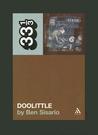
Review of The Pixies' Doolittle by Ben Sisario
The Pixies' Doolittle by Ben SisarioMy rating: 4 of 5 stars
This was a great find from the bookstore in Chelsea Market in New York. This is a whole series of books about some of the greatest albums ever written: kind of the backstory, what do songs mean, interview the artists, and breakdown each song kind of thing.
Doolittle has long been on my list of all-time top five albums, but I was still shocked to find it on a shelf containing a breakdown on Pet Sounds and musings about Highway 61 Revisited (both fantastic in their own right).
Sisario isn't always the easiest to read, and sometimes the structure of his narrative makes little sense to me, which actually begins to make sense when considering the surrealistic nature of the album anyway. He spent his research time mostly with Charles Thompson (aka Black Francis, aka Frank Black), which I think was time well spent. Unsurprisingly, Kim Deal declined to talk to Sisario. Sisario also makes some leaps in his deconstruction of a few songs, which I simply don't see, but to each his own, and Thompson himself wouldn't have any quips about his listeners making meaning from his songs: his songs invite such interpretation. Nonetheless, Sisario still seems elitist at times, but who am I kidding, I am a music elitist, too.
I honestly didn't know about all of the Old Testament allusions on the album, certainly because I obviously hadn't listened closely enough. "Gouge Away" is about Samson, of all things. The Old Testament provides a grotesque palette for Thompson, which makes sense for the Pixies.
What I know from reading it is that I would relish the opportunity to meet and talk to Black Francis, and that I am not the only one that thinks this album is complete genious. You have to be a pretty big music nerd to like this book or the books in the series. I look forward to reading more of the series.
View all my reviews
Saturday, July 18, 2015
Review of Go Set a Watchman by Harper Lee
Go Set a Watchman by Harper LeeMy rating: 2 of 5 stars
Obviously, I could not put this book down. One reason was the unwillingness to stumble upon spoilers. Warning! I must include some spoilers from the book in my review in order to be able to discuss the book, so if you are like me and want to experience the book for yourself, please stop reading at this point.
Have I left enough space for you to stop from reading ahead? Good! Here we go:
I have given this book only three stars for basically one reason: the book is not complete. I don't know how much of this has been echoed by other critics, as I have not read any other reviews yet, but if other readers aren't saying it, they are blind. When I say the book is incomplete, I don't mean that the story has no ending-- quite the contrary, I believe the ending to be one of the redeeming factors of the book, as it showed me what I believe Harper Lee was aiming at thematically. The ending spells out the major themes rather concisely. What I mean by the book being incomplete stems from three items which boil down to a lack of revision:
1. The book has events in it contrary to the events of To Kill a Mockingbird.
There are several examples of my first complaint, but the biggest is that Atticus Finch wins the Tom Robinson case in the Go Set a Watchman universe. Also, the Ewell girl is only 14 in the Watchman universe; whereas, she is 19 in Mockingbird. I can understand some of the complexities of revising a manuscript. Lee may no longer be cognitively capable of the revisions herself, and having someone else do it is always dangerous when considering authorship and author's purpose. Henceforth, I am attempting to view these two books as set in two slightly different parallel universes; therefore, making my first argument easy to ignore.
2. Consistent voice is missing from the dialogue, and the dialogue is didactic.
The end of the book is dialogue-heavy, and Jean Louise's voice in particular rings inconsistent. Sometimes she sounds southern, sometime Yankee, and sometimes so vastly academic that her voice blends in too much with Atticus and her uncle. This problem didn't exist at all in Mockingbird because Lee's first novel received the treatment that it deserved, in my belief. So often literature suffers in our modern world: putting a book out is too often a business transaction instead nursing great writing into a piece of art through revision. Publishers seemed more willing to put off publication in the past until a book was its best. I am not sure what the publisher was thinking here. If they were thinking the readers wouldn't notice, then I think they have underestimated their readers. Also, the end seems rushed, grasping desparately to get the (albeit profound and complex) message across. The thematic elements are revealed in the dialogue, but the action and voice are missing. It becomes a philosophy discussion without the discourse and actions surrounding the characters. Repeating myself, this is a lack of revision.
3. Inconsistent point of view and perspective mar the book, especially at the end.
The book is told in third person limited, sort of. The perspective shifts a bit from person to person at times. Lee also reveals a few actions that occur outside the knowledge of Jean Louise Finch. I have certainly read other books that possess this type of shift, but during the last few parts of the book, I noticed more and more that we receive the thoughts of Scout in first person, which happens rarely or not at all in the beginning of the book. My record player is certainly broken: this is a revision issue and would not have occurred had the book been put out more closely following Mockingbird.
Here's my soapbox: this book shouldn't have been released. I believe the motives behind its release were 100% money-motivated. Maybe I should take it more easily on the publisher and say that it shouldn't have been sold the way it was, as a sequel to Mockingbird written before the first book, but as a found draft of a manuscript (because that is what it is). It shouldn't have even been packaged to look like a novel. Still trying to be understanding, I can also imagine the uproar if the public knew a manuscript existed, and it never saw the light of day, but the publishing industry can't feign innocence here. Think about your favorite book series written in the past 20 years, and find one (maybe barring Harry Potter) that is consistent in quality. The publishing industry remembers that it must stay financially viable but often forgets that it is a conduit for the production and publication of art. I hold the personal belief that publishers pressure writers into putting out the next installment at the expense of quality. (The music industry also should plead guilty here).
All that being said, this book had amazing potential, and I certainly wish the history of this manuscript would have unfolded differently. The character of Jean Louise Finch appears completely developed. I believe that the tomboy of a child we get in Mockingbird develops into the opinionated, independent, lovable twenty six year old from Watchman. Admittedly, I didn't come to the novel completely spoiler-free. I had heard that Atticus Finch seems racist at points in the new book. I was reading To Kill a Mockingbird when I heard this rumor, so I began to look if it was even possible for the symbolic American moral pillar that is Atticus Finch to have racist leanings. I did find a few small pieces that support his dialogue and actions in Watchman. One such moment from the classic is something that Atticus's sister, Alexandra, says. It is something to the effect that "I can't believe that you of all people are getting upset about a case involving a Negro" (loose paraphrase). The other is the scene in which Dill and Scout leave the courtroom and have the conversation with Dolphus Raymond in which Raymond remarks to Scout about complexity of her father. I think that Lee left me enough breadcrumbs to find the so-called racist remarks of Atticus in Watchman plausible. What I think this actually does, to the second installment's merit, is make the character of Atticus rounder and more human. Atticus is as progressive a man as his generation can produce. Possibly, Lee never intended Atticus as a symbol of the perfect moral pillar but instead as an fallible man who believes strongly in justice, and his convictions lead to his actions, which, doubtless, require courage in Lee's original classic. His actions really require no less courage in the original's successor.
Also, I have no problem, as a writer, with the death of Jem Finch, which precedes the events of the novel. I find it necessary to move along the plot between Jean Louise and Henry, and I understand Harper Lee's choice in killing off a character. Still, the matter-of-fact revelation of his death shocked and grieved my soul.
This book is presenting complicated and profound themes about growing up, becoming an adult, and the fallibility of all men.
Though I have remarked that I don't believe this should have ever been published, especially without the word "manuscript" attached to it, if you love the original, you must read it. My advice is to approach it as existing in a slightly altered parallel universe of the original. I mourn the fact that I, myself, don't live in a parallel universe in which this manuscript was discovered and handled within a decade or so of To Kill A Mockingbird.["br"]>["br"]>["br"]>["br"]>["br"]>["br"]>["br"]>["br"]>["br"]>["br"]>["br"]>["br"]>["br"]>["br"]>["br"]>["br"]>["br"]>["br"]>["br"]>["br"]>["br"]>["br"]>["br"]>["br"]>["br"]>["br"]>["br"]>
View all my reviews
Subscribe to:
Posts (Atom)