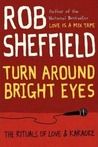
 Turn Around Bright Eyes: The Rituals of Love & Karaoke by Rob Sheffield
My rating: 4 of 5 stars
I have been keeping up with Rob Sheffield since reading his debut memoir, Love is a Mix Tape. He certainly got me hooked. Years before, I had encountered the tall, lanky, geeky Rob on some VH1 countdown, which is like crack to me, especially when the countdown incorporates a lot of music pre-1996 or so. Before 1996, I have retained an inventory of pop and rock popular music knowledge. Rob certainly makes no quips about loving pop music, but he also loves Pavement, so I certainly can at least connect with him there. The masters in English certainly gives us common ground as well. Rob also seems to tie what he listens to to his life experiences at the time that he listens. I relate to his "autobiographic" catalog of music (High Fidelity reference) in much the same way. On first seeing him, he had a Rolling Stone under his name, which didn't necessarily bolster my opinion, but his humor in talking about music just came across as intelligent and bantery in the kind of way that reflected someone who actually knew what he was talking about.
His sophomore release Talking to Girls About Duran Duran contained the same humor and anecdotal storytelling as his first book, but it just lacked "something." Maybe I just didn't connect with the common thread as much.
That was not the case with his third attempt. This book served as a kind of sequel to his first book. He recounts his move to New York to get away from his old life in Charlottesville, life tainted by the death of his wife in his late twenties. Ultimately, the glue that holds everything together, karoake, became the medium in which he told his grief cycle, his 9/11 experience, falling in love with the City, and ultimately, falling in love with the second love of his life (no, not karaoke) his wife, Allie.
Rob's humor and sense of self-deprecation is endearing, a difficult task to accomplish without seeming like you are just being untruthful or the other extreme: complaining about life. What happens in Rob's case is he achieves growth, discovering universal truths through whatever is his current obsession.
The book even made me want to try karaoke-- a vastly extroverted task for an introvert like me. Also an odd occurrence for my inner music snob. While I would certainly have to comb through the catalog of crap, in looking at common karaoke lists, I do believe that I could find a whole lot that I would enjoy to sing, mostly 80s one hit wonders, guilty pleasures, and occasional jewels that one has to look deeply for (Ben Folds! Who knew?). I guess my message here would be, look for me at a karaoke night near you... okay, maybe not, but I may be experiencing the closest thing on my Wii console soon enough. Who knows, maybe we will even have people over and make it a collective experience.
This book perfectly closes the hole left open in my heart from his debut. I would love to see The Rob Sheffield Story: Highway to Hell and Back at my local theater, or at least as a Lifetime movie of the week (Rob would approve).
View all my reviews

