Sunday, August 23, 2015

Review of The Bonesetter's Daughter by Amy Tan

The Bonesetter's DaughterThe Bonesetter's Daughter by Amy Tan
My rating: 5 of 5 stars

After a summer of highly disappointing new books, I felt that I should read something that I knew would be well-written. The Bonesetter's Daughter certainly didn't disappoint. I have long been a fan of Amy Tan's short stories, but have somehow never found the time to read any of her novels. (I know, I should read The Joy Luck Club).

The characters were very real and relatable. Tan is a master dialoguestician (it's a word now, deal with it). I found the depiction of Ruth, the primary narrator, very true to life-- a woman with a complicated relationship with her mother, LuLing, who immigrated from China. Growing up, Ruth has constantly been under her mom's overbearing thumb. In most of Ruth's early depiction of her mother, I felt, as a reader, no sympathy or positive emotions toward LuLing, though the narrator does keep going back to and helping her mother.

However, after LuLing narrates (through memoir) the middle of the book, the reader can see why LuLing is hardened and strict with her daughter growing up because of the hardships that have befallen her. What I found so fantastic is the two diverse voices in the narration between LuLing (who has been translated) and Ruth. The skill it takes to write in two such different voices is a skill I would love to add to my writing palette.

The prose in this book is beautiful and thought-provoking, but sometimes that is the easy part. The book is chocked full of complex thematic elements. One element I gravitated to is the complex relationship between memory and the past, and how they aren't analogous. LuLing is amidst the beginning stages of Alzheimer's, it is discovered, and she begins to reveal much about her past which Ruth has never heard or has heard alternate versions of, and Ruth begins to attribute these "misrememberings" as further evidence of her mother's lapsing memory. Ruth discovers writings her mother has scratched down, and has them translated by someone who reads Mandarin better than Ruth, who has neglected her mother-given duty to learn the characters of the language. What comes back from the translator affirms many of the memories referred to by LuLing. The irony of a woman with memory loss who is now speaking in more truths than she had before is a revealing commentary about memories and the past not being at all synonymous. As a matter of fact, the past and memory almost become opposites.

One other element I found intriguing was the topic of voicelessness. As the novel begins, Ruth talks much of the past: of a period of time each year when she loses the ability to speak, as well as a traumatic event in her childhood that causes her to go mute for a time, though part of this is put on because LuLing begins treating Ruth in a much kinder way. It is during this time that Ruth begins to channel the spirit of LuLing's deceased nursemaid (view spoiler), who LuLing refers to as Precious Auntie. In fact, Precious Auntie is the eponymous bonesetter's daughter. I did find it a nice touch that this "channeling" in a way, also made Ruth a bonesetter's daughter. Precious Auntie loses her own voice after a series of truly tragic events. The voicelessness gives a desperation to the story telling. The lack of voice reveals itself as the novel unfolds and this story, Precious Auntie's and LuLing's stories, struggle to find their way from the past into Ruth's present. Voicelessness reflects our emotional inabilities for honesty and speaks to the complexity of our own mind's repression and reluctance for giving us the truth (the truth itself being as complicated and clouded as much as memory).

I consider the novel a superbly-conceived and remarkably-written modern classic and look forward to my next Amy Tan novel.

View all my reviews

Sunday, August 9, 2015

Review of Armada by Ernest Cline

ArmadaArmada by Ernest Cline
My rating: 3 of 5 stars

Of course when I found out that Ernest Cline was writing another book, I had to read it. Ready Player One was one of my most favorite reads in the past few years. I certainly hate to compare one book with another, but I can't completely separate the two book, partially because the author refers to let me, and that isn't a good thing.

The book is missing some crucial components to make it great. The first is voice. This book seemed very lacking when it came to well-composed sentences and characters with unique voices. The narrator, Zack Lightman, didn't really have a unique or believable voice to me, which hindered my caring about what happened to him as a character. The story was still entertaining enough to push through, but in this genre, I feel like the reading should be effortless, and it wasn't. It wasn't due to intentional syntactical difficulties (or any syntactical difficulties for that matter), vocabulary, or complex themes, which I feel like are valid reasons for readers to slow down in their reading. It just simply was due to an indifference on my own part.

Also, given the open-ended nature of the book, it seems as if a sequel could be in the works, which might quell some (but not all) of the complaints I am about to mention. My second real complaint is that there was way too much superfluous information in the book. The extra stuff served no purpose to me: it didn't make the work more real; it didn't add to my understanding of the characters in any real way; and it wasn't addressed later in the book (though it could be in a sequel). I also found that the relationship between Zack and Lex. It was completely unnecessary unless there are sequels. It just seems like he wanted an ill-conceived and not well-developed, forced love story in the book. There could have been much more actually story instead of the pages wasted on Lex.

I was much more intrigued by (view spoiler)

Also, Ernest Cline's knack for constantly referencing the 80s, video games, and cult classic movies didn't stop with Ready Player One, and while I found some of the references more than welcome, many of them felt forced and didn't really add much uniqueness to the characters or story.

The conspiracy theories stemming from Zack's father's journal I found very intriguing. I also liked the mythos that was built with these disappearing arcade games. Next time I play a space battle video game, I will think of the conspiracies mentioned in this book.

Overall, it fell flat, and my own nerdiness it what made me like it. I am actually hoping for a sequel. I think that a lot of the unnecessary elements of this book could be made more complete by a (hopefully better written) sequel.


View all my reviews

Sunday, July 19, 2015

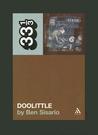
Review of The Pixies' Doolittle by Ben Sisario

The Pixies' DoolittleThe Pixies' Doolittle by Ben Sisario
My rating: 4 of 5 stars

This was a great find from the bookstore in Chelsea Market in New York. This is a whole series of books about some of the greatest albums ever written: kind of the backstory, what do songs mean, interview the artists, and breakdown each song kind of thing.

Doolittle has long been on my list of all-time top five albums, but I was still shocked to find it on a shelf containing a breakdown on Pet Sounds and musings about Highway 61 Revisited (both fantastic in their own right).

Sisario isn't always the easiest to read, and sometimes the structure of his narrative makes little sense to me, which actually begins to make sense when considering the surrealistic nature of the album anyway. He spent his research time mostly with Charles Thompson (aka Black Francis, aka Frank Black), which I think was time well spent. Unsurprisingly, Kim Deal declined to talk to Sisario. Sisario also makes some leaps in his deconstruction of a few songs, which I simply don't see, but to each his own, and Thompson himself wouldn't have any quips about his listeners making meaning from his songs: his songs invite such interpretation. Nonetheless, Sisario still seems elitist at times, but who am I kidding, I am a music elitist, too.

I honestly didn't know about all of the Old Testament allusions on the album, certainly because I obviously hadn't listened closely enough. "Gouge Away" is about Samson, of all things. The Old Testament provides a grotesque palette for Thompson, which makes sense for the Pixies.

What I know from reading it is that I would relish the opportunity to meet and talk to Black Francis, and that I am not the only one that thinks this album is complete genious. You have to be a pretty big music nerd to like this book or the books in the series. I look forward to reading more of the series.

View all my reviews

Saturday, July 18, 2015

Review of Go Set a Watchman by Harper Lee

Go Set a WatchmanGo Set a Watchman by Harper Lee
My rating: 2 of 5 stars

Obviously, I could not put this book down. One reason was the unwillingness to stumble upon spoilers. Warning! I must include some spoilers from the book in my review in order to be able to discuss the book, so if you are like me and want to experience the book for yourself, please stop reading at this point.

Have I left enough space for you to stop from reading ahead? Good! Here we go:

I have given this book only three stars for basically one reason: the book is not complete. I don't know how much of this has been echoed by other critics, as I have not read any other reviews yet, but if other readers aren't saying it, they are blind. When I say the book is incomplete, I don't mean that the story has no ending-- quite the contrary, I believe the ending to be one of the redeeming factors of the book, as it showed me what I believe Harper Lee was aiming at thematically. The ending spells out the major themes rather concisely. What I mean by the book being incomplete stems from three items which boil down to a lack of revision:

1. The book has events in it contrary to the events of To Kill a Mockingbird.
There are several examples of my first complaint, but the biggest is that Atticus Finch wins the Tom Robinson case in the Go Set a Watchman universe. Also, the Ewell girl is only 14 in the Watchman universe; whereas, she is 19 in Mockingbird. I can understand some of the complexities of revising a manuscript. Lee may no longer be cognitively capable of the revisions herself, and having someone else do it is always dangerous when considering authorship and author's purpose. Henceforth, I am attempting to view these two books as set in two slightly different parallel universes; therefore, making my first argument easy to ignore.

2. Consistent voice is missing from the dialogue, and the dialogue is didactic.
The end of the book is dialogue-heavy, and Jean Louise's voice in particular rings inconsistent. Sometimes she sounds southern, sometime Yankee, and sometimes so vastly academic that her voice blends in too much with Atticus and her uncle. This problem didn't exist at all in Mockingbird because Lee's first novel received the treatment that it deserved, in my belief. So often literature suffers in our modern world: putting a book out is too often a business transaction instead nursing great writing into a piece of art through revision. Publishers seemed more willing to put off publication in the past until a book was its best. I am not sure what the publisher was thinking here. If they were thinking the readers wouldn't notice, then I think they have underestimated their readers. Also, the end seems rushed, grasping desparately to get the (albeit profound and complex) message across. The thematic elements are revealed in the dialogue, but the action and voice are missing. It becomes a philosophy discussion without the discourse and actions surrounding the characters. Repeating myself, this is a lack of revision.

3. Inconsistent point of view and perspective mar the book, especially at the end.
The book is told in third person limited, sort of. The perspective shifts a bit from person to person at times. Lee also reveals a few actions that occur outside the knowledge of Jean Louise Finch. I have certainly read other books that possess this type of shift, but during the last few parts of the book, I noticed more and more that we receive the thoughts of Scout in first person, which happens rarely or not at all in the beginning of the book. My record player is certainly broken: this is a revision issue and would not have occurred had the book been put out more closely following Mockingbird.

Here's my soapbox: this book shouldn't have been released. I believe the motives behind its release were 100% money-motivated. Maybe I should take it more easily on the publisher and say that it shouldn't have been sold the way it was, as a sequel to Mockingbird written before the first book, but as a found draft of a manuscript (because that is what it is). It shouldn't have even been packaged to look like a novel. Still trying to be understanding, I can also imagine the uproar if the public knew a manuscript existed, and it never saw the light of day, but the publishing industry can't feign innocence here. Think about your favorite book series written in the past 20 years, and find one (maybe barring Harry Potter) that is consistent in quality. The publishing industry remembers that it must stay financially viable but often forgets that it is a conduit for the production and publication of art. I hold the personal belief that publishers pressure writers into putting out the next installment at the expense of quality. (The music industry also should plead guilty here).

All that being said, this book had amazing potential, and I certainly wish the history of this manuscript would have unfolded differently. The character of Jean Louise Finch appears completely developed. I believe that the tomboy of a child we get in Mockingbird develops into the opinionated, independent, lovable twenty six year old from Watchman. Admittedly, I didn't come to the novel completely spoiler-free. I had heard that Atticus Finch seems racist at points in the new book. I was reading To Kill a Mockingbird when I heard this rumor, so I began to look if it was even possible for the symbolic American moral pillar that is Atticus Finch to have racist leanings. I did find a few small pieces that support his dialogue and actions in Watchman. One such moment from the classic is something that Atticus's sister, Alexandra, says. It is something to the effect that "I can't believe that you of all people are getting upset about a case involving a Negro" (loose paraphrase). The other is the scene in which Dill and Scout leave the courtroom and have the conversation with Dolphus Raymond in which Raymond remarks to Scout about complexity of her father. I think that Lee left me enough breadcrumbs to find the so-called racist remarks of Atticus in Watchman plausible. What I think this actually does, to the second installment's merit, is make the character of Atticus rounder and more human. Atticus is as progressive a man as his generation can produce. Possibly, Lee never intended Atticus as a symbol of the perfect moral pillar but instead as an fallible man who believes strongly in justice, and his convictions lead to his actions, which, doubtless, require courage in Lee's original classic. His actions really require no less courage in the original's successor.

Also, I have no problem, as a writer, with the death of Jem Finch, which precedes the events of the novel. I find it necessary to move along the plot between Jean Louise and Henry, and I understand Harper Lee's choice in killing off a character. Still, the matter-of-fact revelation of his death shocked and grieved my soul.

This book is presenting complicated and profound themes about growing up, becoming an adult, and the fallibility of all men.

Though I have remarked that I don't believe this should have ever been published, especially without the word "manuscript" attached to it, if you love the original, you must read it. My advice is to approach it as existing in a slightly altered parallel universe of the original. I mourn the fact that I, myself, don't live in a parallel universe in which this manuscript was discovered and handled within a decade or so of To Kill A Mockingbird.

View all my reviews

Sunday, June 14, 2015

A Case Study in Being a Human Being: Reflections After Year Three of Teaching

As I wrapped up yet another year of teaching during that last week of May 2015, I found myself in my usual retrospective mood-- joy in the fact that my students and I had survived another year, a warmth in the (hopefully) lasting human connections I had made with a few students, a twinge of melancholy in knowing that I would never see some of these students again, some contrition for the times when my classroom plans had failed miserably, acceptance that those failures will make me a better teacher, and the seed of anticipation that just begins to bloom in the Springtime throes surrounding the end of school each May.

I have become a true believer that much can be learned from reflection. I have also become a true hypocrite in that I don't practice the benefits of the reflection I preach. Teaching has taught me far more than I am able to teach my students within the confines of a year. When I initially began teaching I thought that it would be a joy to speak about reading, books, and writing on a daily basis at work. That and actually using those two degrees in English. Working with young people gave be trepidation, and I was unsure about how "to be" around them. Teaching has engendered in me human qualities I didn't even know were missing from my life. It has taught me more about people and life than it could possibly teach me about reading, writing, classroom management, or testing strategies. I embarked on teaching so I could "use my degree," what I found was a calling, a passion, a part of myself that I didn't know I was missing. Below is merely a snippet, five bulletpoints about what I have learned in the past three years, but probably more specifically this school year.

1. I am awkward, and that's a good thing.

I know what you are thinking: no kidding you are awkward, Shelby. I have known you for __ number of years, and rarely have I had a social interaction with you that either your body language or failure to find words hasn't resulted in some kind of discomfort. Denying or even not acknowledging that this social discomfort isn't part of me would be an elephantine (in the room) failure of acknowledgement. What truly strikes me about this realization as it pertains to my teaching career is that when I initially imagined teaching in my head, I imagined myself as this powerful, awe-inspiring, podium pounding, eloquent imparter of knowledge-- complete with uproarious student applause at the end of each fifty minute TEDTalk-esque, inspirational lecture. Or maybe I have just seen too many depictions of teaching on television and in movies. My fantasy, as usual has no place in reality.

Although I have had a few moments of laudable whole classroom instruction (we are talking maybe a few minutes in a few years), where I find the meaningful connection with my students is one-on-one interaction. When I sit down with one student, learn a little bit about him, and help him, that is when I get those warm-fuzzy-inducing moments where the student learns something. Now this revelation might be something as minor as learning how to write a hook or as large as realizing the importance of an personal idiosyncrasy that bestows true individuality. Both have happened, but they have always happened when talking face-to-face, usually sitting at a student desk or in my rolling chair next to the student. To be that powerful, well-spoken blowhard at the front of the class wouldn't be fair to my students, and wouldn't even be true to who I am. These one-on-one interactions are rife with my awkwardness all the same, and that's okay. My own social eccentricities probably put my students more at ease: I am just a human being, too. I struggle finding the right words at times (especially when speaking) as well as grappling with the decision of what on earth to do with my hands and posture while speaking. Here's the revelation: I don't have to cover for these moments. It is okay to be awkward. It is a human quality I possess. That's right students, regardless of how much I love sci-fi, I am just too human to be from outer space.

Somewhere during my second year, I ceased trying to mask my ineptitude, and wouldn't you know, a whole lot more of my personality began to come out. Students began to connect with me in new ways: come by after school to get help because they wanted to. They began to tell me what was going on in their lives. In short, they started to trust me which translated to the classroom, though I had made no real changes to instruction.

It was just this year that I realized that I had stopped trying to mask that part of myself. It came through three (seriously three) heartfelt and kind notes from students in which they acknowledged my awkwardness. They praised this quality. If they remember me, it is what they will take with them. I realized that it is okay. I will probably never be someone who ever feels completely comfortable standing in front of a group of people and talking, whether I am speaking about verisimilitude in short fiction, fire drill procedures, or especially in a group of my peers. My stutters and slumped shoulders aren't a deal-breaker: I can still communicate effectively enough to get to the fun part, the one-on-one interactions with others.

2. Teaching is hard. Thank God.

Here are my favorite question to answer and statement to address in the classroom-- Question: "Is your class gonna be hard?" and Statement: "This is hard." My simple answer to the question: "Yes!" (enthusiastic exclamation, not angry exclamation). Response to the statement: "I know."

My justification for things being hard: because I have never really learned anything about life, or literature, or math, or relationships, or whatever without it being difficult. Teaching is the most arduous, sometimes thankless, certainly most exhausting professional or academic endeavor I have ever attempted. My experience in figuring out why a Sharepoint intranet calendar wouldn't work, isolating infinite loops in VB.Net programs, managing a group of high school kids trying to prepare food for a lobby full of disgruntled football-goers after a fully-packed 90,000-spectator-attended football game in which the Aggies lost in overtime, and writing a 100-page Master's thesis over a difficult postmodern novel don't hold a candle to the difficulties I have discovered in teaching. But here's the thing: I love the struggle. I love teaching. I love teaching more than I could have possibly loved any of my aforementioned occupational and academic endeavors. My own education was an obvious life-changing experience, but I have learned mountains more in three years of teaching than I learned in the three years of grad school.

I thrive on challenges, and each year, each class, each individual presents a new challenge. A challenge that I often fail at many times before getting it at least partway right. Don't get me wrong, I am not at school to make something so impossibly hard for my students to achieve. I am there to support them along every step of the way. They don't all seek me out to get that support sometimes, but there I am nonetheless to do everything under my power to help. So when my students ask if something will be hard, I am honest, "yes," and thank God. It's a good day to learn something.

3. Relationship reigns over rhetoric.

The content NEVER matters as much as the young people sitting in my classroom. This revelation, like others are things that I have been told, things that I even believe are true, but intellectually believing something is true and spiritually knowing it is true-- knowing it is true through experience and God-given, universe-shattering revelation is something quite different. It has taken experience to achieve this spiritual acceptance that individuals are ALWAYS more important than content. My aforementioned social gawkiness certainly doesn't help me build relationships, so finding ways to overcome the idea that my content is ever more important that acknowledging and treating each one of my students (no matter how much I don't like them, which honestly, I can count these "special" students on one hand after three years) like a human being.

I have figured out ways to cope with this. I know I am better at expressing myself through writing than I am through spoken words. I haven't given up on bestowing praise to students and having conversations verbally, but it dawned on me that I needed to find a way to get to each and every student this year to show them that they were all individuals, and I had noticed something positive about each and every one of them. So, immediately preceding the AP test for those students in my AP classes, I wrote a note, an individually, handwritten, heartfelt, non-bottled note to each one of them. It was time-consuming. It required thought. It required something else that I often have trouble accessing: my feelings. The return-on-investment I received from this simple act, however, was payed back at least ten times over. The mental engagement I received from them and the suddenly blooming relationships that were created from what had been a metaphorical sprig of yellowed grass shocked me. My students showed up ready to take on the challenge of the difficult AP test as well as the rest of the semester. These notes were nothing revolutionary. I am sure many teachers have done this before, but it was the fact that the notes were directly crafted for each student, letting each know that I see them all as individuals and carry unique memories and experiences about each around with me, that broke through a brick wall I didn't even know existed.

The dividends I received inspired me to offer individualized written encouragement to all of my non-AP students before school was out. I hope that my small action will enrich each of their futures, if only in a small way.

4. Summers off are a myth. Woohoo!

Another one of those thoughts that I had when I initially approached teaching was "Sweet! Summers off!" "Ha!" I say to this. Summers off are laughable. Certainly, I have been blessed with certain additional responsibilities during my teaching career that have necessitated copious amounts of workshops and training during the summer. Certainly, I have volunteered to participate in noncompulsory trainings. Certainly, I have volunteered for committees, teaching summer boot camps, and teaching summer school. However, even if I hadn't volunteered and been volunteered for these summer activities, I still wouldn't have summers off because even during times (even a whole month) when I had nothing, I am constantly planning, constantly stumbling across new methods, and constantly pondering my own teaching practices trying to improve them. Why? Teaching is a part of me. It somehow has wedged its way into my genetic makeup. Who knows? Maybe it was there all along.

My Great Grandmother, "Mama Lois" Ratliff, formally taught English for almost 40 years of her life in rural Texas, but even after retirement, it was just too much a part of her. She couldn't stop. Her grandchildren (my mom, aunt, and uncle) recall that Mama Lois always kept them busy: painting pictures, reading stories. I recall much of the same including (mostly failed) attempts at getting me to draw bowls of fruit and reciting the alphabet backwards. Each holiday season would roll around and Mama Lois would order my sister and I the most education-ridden presents you can imagine. I remember a particular gift from National Geographic in which you would insert these large paper disks that would ask questions based on the category of the disk (geography for instance), and there would be a second paper disk where you could bubble the correct answer. The funny part is, even my 11-year-old self realized that this present was supposed teach me something, but it didn't keep me from actually enjoying the gift. I am pretty sure I used all the paper disks of said educational gift before the apparatus itself became lost to the mysteries of time.

I know my Mama Lois couldn't help it, and neither can I. I remain excited about the prospect of something new for the upcoming school year, that I am constantly mindful and even seeking out new things to try in class. Teaching is a part of me.

5. A loud classroom can be a wonderful thing.

I know this statement sounds shocking, but I have witnessed some magnificent learning in boisterous, bordering-on-uncontrolled enthusiastic classroom settings. Granted, there is a time and place for such instances, but a completely quiet classroom can often be the sign on an unengaged one.

Television especially paints this picture: an adult at the front of the room speaking to desks in perfect rows. The adult writes on the chalkboard or, in these modern times, operates a PowerPoint presentation. In the case that these fictional, appearing-older-than-they-supposedly-are students are taking a test (which seems to happen every other episode), the teacher sits at his desk observing the class or attempting to quiet the whispering which is driving the plot forward. All this is inevitably occurs in a remarkably small class of 8-12 students where, contrary to all common sense, students who can't seem to not speak to one another constantly, students with names the audience knows sit immediately adjacent to each other at the front of class surrounded by students who the script has graciously christened "Student 1,2,3, and 4." While my own common sense governs the reality that teaching was never going to be like this Hollywood depiction, I still believe my subconscious mind had trouble letting go of some of these ideas.

I had many experiences this year with successfully loud classrooms, but two seem to stand out most. The first was using some guided reading strategies and annotation strategies in order to guide my classes with a high population of English as a second language students through some particularly tough texts. The strategies required the students to chunk the text and stop to have discussions before moving on in their reading. I was amazed at the volume of escalation in class during these times. I was even more flabbergasted that as I went around to each group: they were on task, holding themselves accountable for their time using the timers I had provided to each group. The reflections and understanding of these texts at the end of these sessions were certainly the most exemplary I have received to date.

Likewise, near the end of the year in my AP classes, they were writing and performing parodies of scenes from Hamlet. These classes were loud, full of laughter, applause, three groups rehearsing simultaneously, props being flung across the room. All I know is at the end of this project, each group had a strong grasp of what happened in their chosen scene, why it mattered, why parody is funny, and hopefully that learning can and should be fun.

These situations always drive me a little mad when they are spinning all around me, a kaleidoscope of sound and thought, but I have learned to let these occurrences happen when they need to. The students, because of their immersion in busyness and technology, can tune out the white noise better than me anyhow. And this whole teaching deal is really just one big lesson in humility anyway. It is truly all about them, the students. Right?

Saturday, June 13, 2015

Review of Into Thin Air

Into Thin Air: A Personal Account of the Mount Everest DisasterInto Thin Air: A Personal Account of the Mount Everest Disaster by Jon Krakauer
My rating: 5 of 5 stars

I had wanted to read this book, but it wasn't absolutely at the top of my list. Having a classroom set, I proposed it as one of the books my summer school students could select. I am grateful they did select it. It is one of the finest pieces of non-fiction I have read in quite some time.

Krakauer frames the story by beginning with the moment he has reached the high point on the planet, and by mentioning the impending hardships and doom that is bearing down on the mountain in 1996. It was, quite frankly, one of the greatest hooks I have ever read in a piece of non-fiction.

I enjoyed the rich history and the obvious research that Krakauer did for the book. Even though he was a participant on the climb itself, it became apparent that while stretching the human body to such extremes, the mind reels and itself becomes unreliable. It was almost like reading fiction at times in doubting what this "narrator" the voice of Krakauer was telling. Certainly, any inaccuracies here were cleared up as much as possible through the research that lead to the author's writing of the book.

What I was struck with utmost was the philosophical questions the book brings up: What compels people to stretch themselves past the realm of what seems possible? How does passion blind us all? How does passion make us stronger? What risks are we willing to take in order to achieve our goals? How lofty can mankind's goals be?

When turning these questions back upon myself, I have realized that I have been highly cautious of taking risks in my own life, especially of late. Don't go worry about me jumping out of airplanes and grinding up 29,000 foot high mountains any time soon (though I certainly did question which aspects of a climb such as the one recounted in the book I would be capable and those which I would be unable to cope with). I am a naturally cautious person; therefore, trying new activities, especially activities in which I "put myself out there." I may be most successful at work in trying new lessons, relationship-building activies, and strategies, but otherwise, I feel like I have been failing at life a little bit (nothing that can't be remedied of course).

Furthermore, this caution has extended to my writing-- something about which I am truly passionate. I am afraid of putting myself out there as a writer though. It has been over a year since I have tried to get anything published, and even that effort was half-assed at best. I haven't written all that much. Realizing that my efforts have been severely subpar, Into Thin Air has revealed to me that dreams sometimes depend upon sacrifice. The sacrifices about which I am speaking seem minor to those of the characters in the book. I may be required to sleep a little less, watch a little less TV, have a slightly messier house. I am not talking about months away from my family, sacrificing limbs and brain cells to extreme altitude climbing here. It seems asinine that my fear of rejection or fear of revealing too much about myself or fear of being unsatisfied with my own efforts could keep me from achieving some of the goals, both spoken and unspoken, that I have set for myself.

I found the book heart-touching, tragic, while still being able to leave me with a motivation and some semblance of a sense of victory of man over insurmountable odds (particularly the events surrounding Beck Weathers, a doctor from Texas who was on Rob Hall's team (Krakauer's guide)).

At the movie theater just the other night, shots of mountain peaks and men struggling up the slope filled the screen in a trailer. A storm rolls in, the name "Rob" is mentioned, and I immediately knew it was a recounting of what happened atop Everest in 1996. Everest is also the title of the movie. The excitement caused me to nearly wet myself. I have also watched the IMAX documentary that was shot during the year these events took place. The members of the IMAX team play a vital role in Krakauer's book as well. I am anxiously awaiting the film due out this September.

I would recommend this book to anyone with a pulse.

View all my reviews

Monday, June 8, 2015

Review of Make Lemonade

Make Lemonade (Make Lemonade, #1)Make Lemonade by Virginia Euwer Wolff
My rating: 3 of 5 stars

I read this book primarily because it is one of the books that my summer school students decided to read. I enjoyed it more than I initially though I would.

The voice of the narrator, Lavaughn, is strong and reads like someone who doesn't necessarily have a great education, but sometimes Wolff seems to go too far. At times Lavaughn seems a little slow mentally and naive considering the environment she has been raised in. While I certainly understand that her mother has attempted to shield her to the hardships of poverty that surround the family, Lavaughn seems to miss facts about Jolly's life that are clear to the reader, but not clear to the narrator, including the filth and abuse that encapsulates Jolly's life. The writing of a narrator that can reveal facts to the audience without herself understanding them is difficult and the skill required to do so is laudable; however, I believe that Lavaughn should understand many of these ideas. I have found with my encounters of teens in poverty that, for the most part, they are far from naive and understand the world far better than I did during my high school years.

Feeling invested in the characters is what drove me through the book. It was an easy read despite the difficult subject matter. I can understand how Wolff has received the praise she has. Certainly a great book for teens. I hope that my students enjoy it enough to seek out the next books in the series (I didn't know that it was a series until I added it on Goodreads). I thought that the conflict at the end of the book was a little forced. It almost seemed like an afterthought and came across rushed. I did, however, enjoy the resolution after said conflict. I liked the open-ended nature. It wasn't happily-ever-after, while it did leave me with a feeling of completion as if it were the end of at least this part of the story for Jolly and Lavaughn. I would recommend this read to students as well as those who enjoy youth fiction (it really wasn't quite YA to me).

View all my reviews