Saturday, June 13, 2015

Review of Into Thin Air

Into Thin Air: A Personal Account of the Mount Everest DisasterInto Thin Air: A Personal Account of the Mount Everest Disaster by Jon Krakauer
My rating: 5 of 5 stars

I had wanted to read this book, but it wasn't absolutely at the top of my list. Having a classroom set, I proposed it as one of the books my summer school students could select. I am grateful they did select it. It is one of the finest pieces of non-fiction I have read in quite some time.

Krakauer frames the story by beginning with the moment he has reached the high point on the planet, and by mentioning the impending hardships and doom that is bearing down on the mountain in 1996. It was, quite frankly, one of the greatest hooks I have ever read in a piece of non-fiction.

I enjoyed the rich history and the obvious research that Krakauer did for the book. Even though he was a participant on the climb itself, it became apparent that while stretching the human body to such extremes, the mind reels and itself becomes unreliable. It was almost like reading fiction at times in doubting what this "narrator" the voice of Krakauer was telling. Certainly, any inaccuracies here were cleared up as much as possible through the research that lead to the author's writing of the book.

What I was struck with utmost was the philosophical questions the book brings up: What compels people to stretch themselves past the realm of what seems possible? How does passion blind us all? How does passion make us stronger? What risks are we willing to take in order to achieve our goals? How lofty can mankind's goals be?

When turning these questions back upon myself, I have realized that I have been highly cautious of taking risks in my own life, especially of late. Don't go worry about me jumping out of airplanes and grinding up 29,000 foot high mountains any time soon (though I certainly did question which aspects of a climb such as the one recounted in the book I would be capable and those which I would be unable to cope with). I am a naturally cautious person; therefore, trying new activities, especially activities in which I "put myself out there." I may be most successful at work in trying new lessons, relationship-building activies, and strategies, but otherwise, I feel like I have been failing at life a little bit (nothing that can't be remedied of course).

Furthermore, this caution has extended to my writing-- something about which I am truly passionate. I am afraid of putting myself out there as a writer though. It has been over a year since I have tried to get anything published, and even that effort was half-assed at best. I haven't written all that much. Realizing that my efforts have been severely subpar, Into Thin Air has revealed to me that dreams sometimes depend upon sacrifice. The sacrifices about which I am speaking seem minor to those of the characters in the book. I may be required to sleep a little less, watch a little less TV, have a slightly messier house. I am not talking about months away from my family, sacrificing limbs and brain cells to extreme altitude climbing here. It seems asinine that my fear of rejection or fear of revealing too much about myself or fear of being unsatisfied with my own efforts could keep me from achieving some of the goals, both spoken and unspoken, that I have set for myself.

I found the book heart-touching, tragic, while still being able to leave me with a motivation and some semblance of a sense of victory of man over insurmountable odds (particularly the events surrounding Beck Weathers, a doctor from Texas who was on Rob Hall's team (Krakauer's guide)).

At the movie theater just the other night, shots of mountain peaks and men struggling up the slope filled the screen in a trailer. A storm rolls in, the name "Rob" is mentioned, and I immediately knew it was a recounting of what happened atop Everest in 1996. Everest is also the title of the movie. The excitement caused me to nearly wet myself. I have also watched the IMAX documentary that was shot during the year these events took place. The members of the IMAX team play a vital role in Krakauer's book as well. I am anxiously awaiting the film due out this September.

I would recommend this book to anyone with a pulse.

View all my reviews

Monday, June 8, 2015

Review of Make Lemonade

Make Lemonade (Make Lemonade, #1)Make Lemonade by Virginia Euwer Wolff
My rating: 3 of 5 stars

I read this book primarily because it is one of the books that my summer school students decided to read. I enjoyed it more than I initially though I would.

The voice of the narrator, Lavaughn, is strong and reads like someone who doesn't necessarily have a great education, but sometimes Wolff seems to go too far. At times Lavaughn seems a little slow mentally and naive considering the environment she has been raised in. While I certainly understand that her mother has attempted to shield her to the hardships of poverty that surround the family, Lavaughn seems to miss facts about Jolly's life that are clear to the reader, but not clear to the narrator, including the filth and abuse that encapsulates Jolly's life. The writing of a narrator that can reveal facts to the audience without herself understanding them is difficult and the skill required to do so is laudable; however, I believe that Lavaughn should understand many of these ideas. I have found with my encounters of teens in poverty that, for the most part, they are far from naive and understand the world far better than I did during my high school years.

Feeling invested in the characters is what drove me through the book. It was an easy read despite the difficult subject matter. I can understand how Wolff has received the praise she has. Certainly a great book for teens. I hope that my students enjoy it enough to seek out the next books in the series (I didn't know that it was a series until I added it on Goodreads). I thought that the conflict at the end of the book was a little forced. It almost seemed like an afterthought and came across rushed. I did, however, enjoy the resolution after said conflict. I liked the open-ended nature. It wasn't happily-ever-after, while it did leave me with a feeling of completion as if it were the end of at least this part of the story for Jolly and Lavaughn. I would recommend this read to students as well as those who enjoy youth fiction (it really wasn't quite YA to me).

View all my reviews

Monday, June 1, 2015

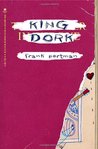
Review of King Dork

King Dork (King Dork, #1)King Dork by Frank Portman
My rating: 4 of 5 stars

The blurb from this book grabbed my attention immediately: it mentioned Catcher in the Rye, rock and roll, and dorks-- three things that I either love, or well, am. It all seemed a little too good to be true, but the book lived up to and even surpassed my expectations in certain ways. It outdid itself thoroughly enough to get me to read the sequel (currently reading). Also to be noted, this book was written by the singer and guitarist of the band Mr. T. Experience, Frank Portman, which makes it that much cooler.

What I think I most appreciated about the book was voice. Portman creates a clear, believable voice of his main character, Tom Henderson a.k.a. Chi-Mo a.k.a. King Dork. There are so many components that add to the voice including the narrator acknowledging his own devil head precocious vocabulary and the way he abbreviates things (the way he a.t. is pretty rad). The ever-changing name of Chi-Mo's band is classic (always complete with stage and debut album names). My personal favorite:Tennis with Guitars (Love Love on Lead Axe, The Prophet Samual on Bass and Rat-Catching, Li'l Miss Debbie on Vocals, Keys, Bumping, Grinding, Beat-Beat on Drums, First album: Amphetamine Low). The names are usually hilarious, and at the beginning of the book, seem to be delusions of something that will never actually happen. As the story goes on, however, Chi-Mo and his best (and arguably only) friend Sam Hellerman (always with two names) eventually do start playing music.

By creating such a clear voice for his protagonist, the author allows us to see when the narrator may be unreliable, and we, as readers, seem to understand that with a character as self-deprecating as Chi-Mo, that sometimes the events that are being related go above his head-- especially when it comes to the way that his peers see him. The narrator's voice also sets up the laugh-out-loud hilarity.

Sam Hellerman was also a fun, yet mysterious, character, who seems to always have more knowledge about the events surrounding Chi-Mo than the narrator himself. Sam Hellerman is highly intelligent, but seems to have his own demons, which I hope are addressed more in the second book: certainly he is a compelling character.

The constant references to Catcher in the Rye make me laugh, and certainly pay tribute to my favorite book of all time. The irony is that Tom Henderson is constantly panning the book as it has become required reading just about every semester of his high school career due to it "having changed my life," according to his teachers. That being said, I need to make a note to my future students who will be reading Catcher in class next year: (a) it DID change my life (b) I know it is a cliche, and (3) I realize it's a cliche and have come to terms with it.

The book really focuses on three plot lines: Chi-Mo trying to discover secrets about who his father was and how he died, Chi-Mo's misadventures with girls, and Rock and Roll. The book is very focused and there seems to be nothing really superfluous (superfluity being a major problem I usually have with YA Fiction).

While the end of the book seemed slightly rushed and seemed to contain too much telling and not enough showing for my taste, the 90% of the book before that is a terrific, wondrous depiction of a high school kid trying (unsuccessfully) to hide in the shadows and just make it through. I don't really have any issues with the way in which the book ended, after all, I am reading the sequel, but I thought that it felt like a bit of the race to "the end" (not all strings are tied up by any means).

What I realized most from the book is that there is still a 15-year-old boy trapped inside my psyche (and not all that deeply). I would recommend this book to any male over the age of say 14. I would not, however, recommend the book to most female readers. I just don't think that is Portman's audience, and I think that women would just realize that teen boys think about sex far more than they can possibly imagine and write off the story (though I must say Portman's depiction here is mostly accurate). Seriously though, if you don't believe me, just look at a Goodreads review written by a female: most of them hate the book.


View all my reviews

Monday, May 25, 2015

Review of Funny Girl

Funny GirlFunny Girl by Nick Hornby
My rating: 3 of 5 stars

Reading during the school year is vastly difficult. I was never the kind of guy to be reading more than one book at a time before I became a teacher, but now, if I want to read anything for pleasure, it seems to be necessary. That being said, there were whole weeks when I wasn't able to pick up this book, which gave me a segmented experience with the whole thing.

I am a huge, ridiculously loyal, "all-time top 5" fan of Nick Hornby. When he puts something new out, I MUST read it. Honestly, this is not my favorite by him, but I still gave it four stars. I thought it had a very interesting cast of characters, from the "Funny Girl" herself, first known as Barbara, then as Sophie Straw, then cast as a woman named Barbara on a television show to Tony, Bill, Clive, and Dennis, who surround the production of the TV series. I liked Barbara (Sophie(Barbara)) immediately due to her wanting to escape the mundane life for which she was destined. Could Blackpool be the Amarillo, Texas of England? Perhaps.

I did, however, feel that in the space of the novel, that some of the other characters lacked development and became cliches, but it really could have been my segmented experience with the book. It could also be that I got over-involved with Sophie's character from the get-go, and believed in my mind that we would be taking this ride with Sophie and that the other characters would just be supporting cast. Nonetheless, I felt there was some underdevelopment except maybe for Clive, who only works as a walking cliche. Bill was a character that seemed very stereotypical to me, and I don't feel that he should have come off that way. Tony had some fascinating moments, including his ambiguous (even to him) sexuality. Dennis seemed to mostly hide in the background (which makes sense for a television producer) until he becomes more central to the events.

Hornby does a magnificent job of painting a picture of swinging London on the verge of sexual, political, and ideological revolution in the 60's, but unlike many books set in the time period I have read before, the main character doesn't get completely swept up in the ephemera of the time. She adapts to the new London while still holding on to part of her Blackpool roots. I found the character of Sophie likable, relatable, and (most importantly) believable.

The author surrounds the events of the books with people real and fictionalized as well as pop culture events that make the story of Barbara (and Jim) seem real and made me as a reader, feel like I was reading non-fiction at points. I felt like a fan of the fictional serial, despite never having seen an episode.

I would recommend this book to Anglophiles, Hornbyphiles, and to film and television history buffs. It was a thoroughly enjoyable read.

View all my reviews

Sunday, April 26, 2015

Review of American Pastoral

American Pastoral (The American Trilogy #1)American Pastoral by Philip Roth
My rating: 3 of 5 stars

I finished this book about a month ago and intended on writing a review, but life is always busy during the school year. Honestly, this book was a struggle. The beginning really seemed to drag and seemed to offer nothing but the building of the mythos of Seymour "The Swede" Levov and frame the rest of the narrative so to give it an unreliable quality, as we understand we are receiving the rest of the narrative as hearsay.

I have no doubt about Philip Roth's literary abilities, and I can see how his prose itself earned him the Pulitzer in 1998. The themes were complex and defined a generation, though I did think that at times I had trouble relating to some of the book as a Gentile: it is certainly Judeo-centric, which is neither positive or negative, but I believe that someone with a Jewish background would certainly relate to the book in a more meaningful way.

The portions of the book that I enjoyed most were the passages that focused on the Levov daughter, Merry. I thought she was the most intriguing character. The way her appearance changed throughout the book is ingenious: reflecting what is going on inside and out. As she is becoming overweight, it is revealed that she is amassing a psychological complex inside of her that can only later be released through radical activism and kooky religions. While she is growing larger and larger, she appears an American consumer: growing fat on greed and ignorance, a symbol for America itself. The last time we see her: disheveled, and a wasting waif, a third-world citizen in the middle of a first class country, I believe that Roth is making a commentary about the possible future of America. A future that has become reflected in today's society, though not to the extreme which Roth seems to be foreboding.

I would recommend this to those who don't mind a challenging, dense text. It isn't necessarily the story itself that is compelling. In order to make the read worthwhile, I had to hunt for the underlying themes.

View all my reviews

Monday, January 12, 2015

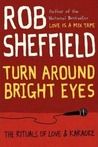
Review of Turn Around Bright Eyes

Turn Around Bright Eyes: The Rituals of Love & KaraokeTurn Around Bright Eyes: The Rituals of Love & Karaoke by Rob Sheffield
My rating: 4 of 5 stars

I have been keeping up with Rob Sheffield since reading his debut memoir, Love is a Mix Tape. He certainly got me hooked. Years before, I had encountered the tall, lanky, geeky Rob on some VH1 countdown, which is like crack to me, especially when the countdown incorporates a lot of music pre-1996 or so. Before 1996, I have retained an inventory of pop and rock popular music knowledge. Rob certainly makes no quips about loving pop music, but he also loves Pavement, so I certainly can at least connect with him there. The masters in English certainly gives us common ground as well. Rob also seems to tie what he listens to to his life experiences at the time that he listens. I relate to his "autobiographic" catalog of music (High Fidelity reference) in much the same way. On first seeing him, he had a Rolling Stone under his name, which didn't necessarily bolster my opinion, but his humor in talking about music just came across as intelligent and bantery in the kind of way that reflected someone who actually knew what he was talking about.

His sophomore release Talking to Girls About Duran Duran contained the same humor and anecdotal storytelling as his first book, but it just lacked "something." Maybe I just didn't connect with the common thread as much.

That was not the case with his third attempt. This book served as a kind of sequel to his first book. He recounts his move to New York to get away from his old life in Charlottesville, life tainted by the death of his wife in his late twenties. Ultimately, the glue that holds everything together, karoake, became the medium in which he told his grief cycle, his 9/11 experience, falling in love with the City, and ultimately, falling in love with the second love of his life (no, not karaoke) his wife, Allie.

Rob's humor and sense of self-deprecation is endearing, a difficult task to accomplish without seeming like you are just being untruthful or the other extreme: complaining about life. What happens in Rob's case is he achieves growth, discovering universal truths through whatever is his current obsession.

The book even made me want to try karaoke-- a vastly extroverted task for an introvert like me. Also an odd occurrence for my inner music snob. While I would certainly have to comb through the catalog of crap, in looking at common karaoke lists, I do believe that I could find a whole lot that I would enjoy to sing, mostly 80s one hit wonders, guilty pleasures, and occasional jewels that one has to look deeply for (Ben Folds! Who knew?). I guess my message here would be, look for me at a karaoke night near you... okay, maybe not, but I may be experiencing the closest thing on my Wii console soon enough. Who knows, maybe we will even have people over and make it a collective experience.

This book perfectly closes the hole left open in my heart from his debut. I would love to see The Rob Sheffield Story: Highway to Hell and Back at my local theater, or at least as a Lifetime movie of the week (Rob would approve).

View all my reviews

Friday, January 2, 2015

Review of A Separate Peace

A Separate PeaceA Separate Peace by John Knowles
My rating: 4 of 5 stars

I now understand why this book is often considered a modern masterpiece. Knowles is very economical with his words. He does just what he has to in order to accomplish his purpose. He left me thinking of not only themes about growing up, but the truth about perception vs. reality and of course themes about war. On considering the message behind growing up, the message that I receive is that none of us truly ever grows up. Growing up seems unattainable, as it means something different for each new generation. Every image that Knowles paints, the descriptions that he gives, and the philosophy that Gene spouts (not that Gene recognizes the weight of his meandering thoughts) are integral to meaning. The author's prose is truly masterful.

I had and still have many doubts regarding Gene. I find him vastly unreliable. The unreliability is compounded by the separation in time that Knowles sets up with the framed narration from the beginning (though the frame is never really closed). Gene's sees the world through rose-colored glasses in the beginning of his recollections, but as Phineas, Gene's "best friend" and role model. I get the impression that Gene builds up the character to legendary, godlike status (view spoiler)

The setting, a boarding school called the Devon school, is perfectly imagined. While I do at times have trouble relating to boys at a boarding school in the early 1940s, the message of the book is universal. I noticed that the character's attitude toward authority, establishment, and doubting of the truth is one that teens, especially fictionalized teens still experience.

Knowles is masterful, even in the selection of his characters' names. Gene: a representative for humanity (so universal, it is programmed in our DNA), Phineas (Finny) swimming through life without a worry in the world, Brinker: always on the edge of starting something, committing to life, but never quite making it.

A classic, but page-turning read.

View all my reviews